
Annual Review 2025-26
From the President
With the first year of my two-year term as President drawing to a close, I have been reflecting on what an honour it has been having a front-row seat to architectural technology going from strength to strength, as both a discipline and a profession. Now that I've broken in my presidential shoes, I'm excited to spend the next year advocating for our community even further, with more talks, more conferences, more CPD, more AT Awards, and getting the name of architectural technology out there to as many people as possible as I continue to represent it at the highest level in 2027.
This year saw a new UK Prime Minister, two worldwide sporting mega-events in the World Cup and Winter Olympics, and a heat wave so immense it felt like no one could think straight for months. Building Safety has remained a key priority, with the Building Safety Regulator becoming a standalone body at the beginning of the year, while the new Government continues to consult on the development of a Single Construction Regulator and the regulation of buildings, construction products and professions. Meanwhile, economic instability and international wars continue to impact the ongoing cost-of-living crisis, meaning you'd be hard pressed to find someone out there who isn't feeling the squeeze.
But with hard times comes opportunity, and with so many homes still needing to be built, retrofitted or made safe, duty calls to architectural technologists, with our expertise and experience in practical building design and technical delivery, to step up and put ourselves front and centre of the conversation. We'll call it: The Age of the AT.
Speaking of, CIAT's 25-26 Annual Review covers the period from November 2025 to November 2026 and showcases what your Institute has been doing to lead and promote safe, sustainable and innovative practice, enhance our value proposition, raise our profile, collaborate with external organisations, and remain financially viable and effective.
It continues to be a great privilege and source of immense pride to be in this position and I hope to continue to do the Institute proud next year. Roll on 2027! Roll on the Age of the AT!
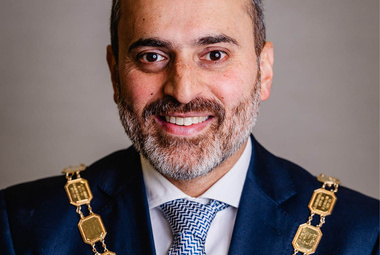
Usman Yaqub PCIAT
President
Lead and promote safe, sustainable and innovative practice
Through 2026, the Institute has been working closely with Government and industry to further embed professional competence. Having developed a detailed position paper for Government, CIAT has contributed to the Ministry for Housing, Communities and Local Government (MHCLG) Built Environment Professions Strategy call for evidence. Drawing on four membership workshops and a survey (which received over 200 responses), the Institute’s submission emphasised the importance of delivering a level playing field and protecting the public by addressing small pockets of poor practice.
The Institute has also contributed to the Construction Industry Council’s (CIC) Professional Competence task force as well its two sub-groups; Competence and Governance; and is represented on the Independent Professional Regulation Co-Design Working Group, which will be submitting its final recommendations to Government early next year.
Throughout the year, CIAT continued to engage and collaborate with MHCLG, the Building Safety Regulator (BSR), Construction Industry Council (CIC), the British Standards Institution (BSI), and the Department for Energy Security and Net Zero (DESNZ), among others, to promote the discipline and improve and upskill the industry.
The Detailing group was established to develop and share guidance with educational establishments that offer CIAT Accredited Programmes to support students in improving their detailing abilities and enhancing their employability after graduating. The group's work continued over the year to define the good practice principles to form the basis of videos and written guidance.
CIAT’s Climate Society has continued to develop over 2026, establishing a number of new working groups, to address topics such as retrofit, circular economy, biophilic design and the UK Net Zero Carbon Building Standard.
Throughout the year, the Institute has provided members and affiliates with updates and guidance on a wide range of regulatory reforms and policy initiatives, supporting excellence in practice. Key topics addressed have included:
-
The Warm Homes Plan
-
The Future Homes and Buildings Standard
-
Late Payments reforms
-
Biodiversity Net Gain (BNG) reforms
-
Minimum Energy Efficiency Standards (MEES) in the non-domestic private rented sector
-
The MHCLG Professions Strategy Call for Evidence
-
National Planning Policy Framework (NPPF) and planning reform
-
The Building Safety Levy for England
-
The Autumn Budget
In September, the Institute hosted its first ever parliamentary roundtable, sponsored by Lee Dillon MP. This roundtable, which was attended by parliamentarians, CIAT representatives, and colleagues from across the sector, explored the challenges that the Government’s Warm Homes Plan will need to overcome if it is to be successfully delivered, building on CIAT’s 2025 report, Beyond the Warm Homes Plan: A National Retrofit Programme for people and planet.
CIAT has continued to engage with parliamentarians from across the political spectrum, attending a range of events and meetings in Westminster. The Institute was also represented at the party conferences of the three largest UK political parties (by seats) and participated in invitation-only ministerial roundtables at both the Labour Party Conference and the Conservative Party Conference, coordinated by the National House Building Council (NHBC). These provided an opportunity to both promote architectural technology and advocate for reforms to deliver a safer, more effective built environment sector.
The Institute is committed to supporting the objective to attain statutory recognition of architectural technologists to undertake the roles of Assigned and/or Design Certifier in Ireland and continues to lobby and engage with the Department for Housing, Local Government and Heritage (DHLGH).
Our comprehensive review of the Code of Conduct and Conduct and Disciplinary Procedures continues, aligning with the Institute’s Charter, Bye-laws and Regulations. The proposed amended Code of Conduct and associated Resolutions will be presented at the AGM in November 2026 for approval. The remaining work will continue across 2027.
We launched a new snappy, 1-minute video which aims to sum up exactly what architectural technology is and what an architectural technologist does in succinct, easy-to-understand language. It can be viewed here: https://www.youtube.com/watch?v=pTfb4Y8nLlI
Enhance our value proposition
The Institute continued to work with relevant stakeholders across each of the four home nations in relation to apprenticeships and was represented at numerous meetings with educational establishments and employers. Click here for more information on apprenticeships.
With the assistance of CITB Wales, CIAT, alongside academics and industry practitioners, is working on the development of a Higher Architectural Technology apprenticeship (covering either Levels 4 and/or 5). It is anticipated that this too will be launched in September 2027 alongside the degree apprenticeship that was developed last year.
Several Building Safety Insight webinars were held in the spring and summer. Two Institute-branded training sessions for prospective non-higher risk buildings (Non-HRBs) Principal Designer registrants were delivered by a CIAT Registered Principal Designer for Non-HRBs.
As part of our on-going collaboration, BRE Academy has refreshed its courses, and they have been updated on the Institute’s AT CPD Register. Additionally, a webinar was held in November to give the membership an overview of the content available on topics such as fire safety, net zero, and the golden thread. A day session was also arranged for carbon literacy on domestic retrofit.
During the year, the AT CPD Register expanded to 15 providers, offering 73 courses on topics including BIM, CDM 2015, fire, conservation, materials, asbestos management, insulation, contract awareness, leadership and professional development, off-site construction, and zero carbon.
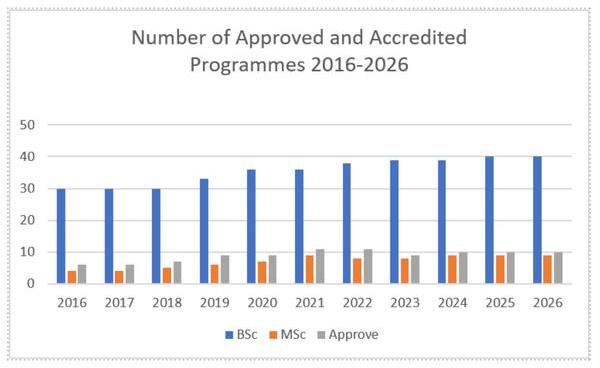
As of the start of November, the Institute’s portfolio of Accredited and Approved Programmes consists of 59 in total. These include 40 Accredited Honours degree level (with University of Roehampton’s BSc (Hons) Architectural Technology gaining Accreditation in July 2026) nine Accredited Masters degree level (with Atlantic Technological University Galway's Masters in Built Environment Regulation gaining Accreditation in March), and 10 Approved programmes. The Institute also proudly welcomed Nottingham Trent University as our fourth Centre of Excellence in June.
Demand for the distinguished Fellow Membership accolade awarded to Chartered Architectural Technologists for significant contribution to and/or excellence in architectural technology remains strong. Fellow Membership has grown by 10%, bringing the total number of Fellows to 160.
In November 2026, the Institute launched a pilot programme for new AT drop-in sessions. These are intended to be open forums for members and affiliates to come and raise issues and seek support from their colleagues, staff and the wider Institute.
The Institute, working alongside the Documents Taskforce, finalised and approved updated contract administration forms to reflect the requirements of the Building Regulations etc. (Amendment) (England) Regulations 2023. The Institute also published the first edition of the Institute's commercial agreement for use in England and Wales. These documents are available to members through the CIAT online shop.
To support members across the different jurisdictions, dedicated Documents Taskforces have been established for Scotland and the Republic of Ireland to review and adapt the documentation in order to reflect their respective legislative and regulatory requirements. Similar reviews are planned for Wales and Northern Ireland to ensure the documentation is appropriate for use in each jurisdiction.
Raise profile and awareness
This year's AT Awards took place on 7 October at the Underglobe on London’s South Bank, so called because it lies underneath the historic Shakespeare's Globe Theatre. It was a joyful night of celebrating the most accomplished, impressive architectural technology projects, and the AT community who are pushing the discipline forward with their projects, their dedication and their hard work. This year's show celebrated ten years of the AT Awards show, with a new presenter, a 360-degree wraparound, and a lot of merry ATs.
aspiration, CIAT’s global community of members and affiliates that comprises students, graduates, Associates, affiliates and recently qualified Chartered Architectural Technologists, had another successful year of community and events.
The aspiration strategy, focusing on developing services and setting objectives for the aspiration community to lead on, was developed and launched in January. A successful education trip to Copenhagen was held in September, with 23 aspiration members attending. Global aspiration Chair and Vice-Chair role profiles have been reviewed and approved while new roles have been developed to support the launch of the Membership Engagement Programme, which include Student Ambassadors and CIAT Ambassadors. Members getting involved will receive a CIAT induction as well as a local induction, with new vacancies being advertised on a new web page in development.
A pilot online calendar of engagement for the aspiration community was launched in September 2026 and has been well received. Topics covered included employability, welcome to new members and affiliates, “Life after uni”, “People Management 101”, “Conflict Management” and “Effective communication and difficult conversations”.
CIAT, as part of B.E Inclusive, took part in the International Women’s Day event held at the RICS headquarters on 6 March. Ann Vanner FCIAT was part of the panel discussion and a number of female members sent in videos for the montage shown at the start of the event. It was an excellent day and very well received. For Black History Month, CIAT took part in the B.E Inclusive film, Common Ground, with Dr Colin Orr PPCIAT MCIAT in discussion with other built environment professionals about their career and working within the sector. We have also taken part in Prides around the UK including London and Manchester.
B.E Inclusive is a joint initiative of leading UK built-environment professional bodies (including CIAT, CICES, CIHT, CIOB, ICE, LI, RIBA, RICS and RTPI) operating under a Memorandum of Understanding and a 2025–30 Action Plan.
The Institute’s business-to-business engagement scheme with subscription options at gold, silver and bronze levels continued to gain traction and raise the profile and awareness of the discipline, profession and Institute. The following joined this year:
-
2N TELEKOMUNIKACE
-
Armatherm Thermal Bridging Solutions Ltd
-
Carlton Design Partnership Ltd
-
Evolution Architecture
-
FF Furnbow Limited
-
Front Architecture
-
Graphisoft UK Limited
-
Keppie Design
A membership promotional event was held in October, with 200 delegates registered and the keynote address being delivered by the Vice-President Education, to promote and provide insight on the membership options to join for students, graduates and routes to qualify for experienced professionals.
Continued support for top-level industry events in Ireland included the National Construction Summit and WorldSkills. At WorldSkills, the Institute received an invitation from the Department of Further and Higher Education, Research, Innovation and Science (DFHERIS) to host its Building Heroes stand.
These established, integral events within the sector engage with stakeholders by promoting the discipline and profession. They are attended by thousands of current and future professionals as well as Centre and Institute staff representatives.
The successful and heavily in-demand monthly Chartered and quarterly Fellow Membership webinars continue to provide a platform to engage and support those wishing to qualify. The webinars are free and accessible to all, with over 500 attending the Chartered Membership webinars held throughout the year.
In November, the Institute was represented at an industry roundtable discussion, How CCPI is Driving a Culture Change Across the Construction Supply Chain, organised by Ravago Building Solutions UK in collaboration with Anglia Ruskin University. The discussion focused on the role of the Code for Construction Product Information (CCPI) in improving product transparency, strengthening accountability and building trust across the construction supply chain.
Engage and collaborate with external organisations
During 2025/2026, CIAT sponsored Open City’s Accelerate Programme, a 10-week syllabus of workshops for 16–18-year-olds from underrepresented groups in London, to raise their awareness of career avenues available within the built environment. The end of year exhibition held in July showcased the work of the 123 students that took part. These included models and orthographic drawings.
In April 2026, a delegation visit was held in Denmark to raise the profile of the Institute, explore collaborative opportunities, engage with academic and professional partners, support membership and aspiration growth, value proposition development and future engagement mechanisms.
The delegation visited VIA University College in Aarhus to discuss student exchange through Erasmus+. There was an aspiration professional and social networking event attended by current and recent graduates.
At VIA's campus in Horsens, a presentation on AI in architectural technology education was delivered to all built environment teaching staff. Simultaneously, a session was held with students regarding the benefits of student membership and a lived experience from a Danish student member and aspiration representative who undertook a year's study exchange on the CIAT Accredited Programme at the University of Salford.
Meetings were arranged with Dalux, a Danish construction software company, as well as Konstruktørforeningen (KF), the Danish Association of Architectural Technologists and Construction Managers. This was followed by a networking event in Copenhagen with VIA graduates, KF and industry contacts.
The Institute, with support from the CIAT Network and aspiration, continued to offer AT/CIAT introduction sessions to all first-year university students in relevant courses, as well as Careers, Employability and Professional Development Sessions aimed at final year students. The final year sessions continued to be supported by recruiters, such as Hays, Architecture Social, Graphisoft, Confero, and Bespoke Careers.
CIAT held a peer session in November to review educational establishments’ end of year show plans, engagement and lessons learned, in order to build a framework for the CIAT Network and identify resources required for 2027.
An Education Engagement Strategy for the CIAT Network was developed in the summer, resulting in the first peer session in October to consult with the Institute’s educational partners. The AT education network was launched in late November.
CIAT and RICS formally re-affirmed their commitment to collaborate for the betterment of society, maintaining and raising professional standards, enhancing competence and providing mechanisms for potential memberships with both institutes at the Associate, Chartered or Fellow levels. A strategic relationship with RICS Matrics (their network dedicated to students, apprentices, trainees, and newly qualified surveyors) has been developed to support local collaboration.
The Institute has been working with the Federation of Master Builders (FMB) on initiatives to improve understanding of the Principal Designer (PD) and Principal Contractor (PC) roles under the Building Regulations. This included a webinar featuring representatives from the respective professional institutes, alongside the current development of guidance for the Planning Portal to help homeowners better understand these regulatory roles and their responsibilities.
The Institute has been working with the Planning Portal to raise the profile and recognition of Chartered Architectural Technologists and promote their role within the built environment. This collaboration also includes opportunities for CIAT to contribute thought leadership articles and guidance on key industry topics, including but not limited to client duties and retrofit.
Chartered Architectural Technologists represented CIAT through the Accessible Housing & Building Standards Working Group in Scotland and the Scottish Government’s Building Standards Division. The group’s works focuses on accessibility, housing standards and the development of building regulations and standards in Scotland.
From November 2025 to the end of October 2026, the Institute has responded to 41 consultations, with a further five responses promoted to members to respond directly.
This has included consultations from government departments, parliamentary committees, regulatory and sector bodies and devolved administrations, including the Ministry for Housing, Communities and Local Government (MHCLG), the Department for Energy Security and Net Zero (DESNZ), the Department for Environment, Food & Rural Affairs (DEFRA), the British Standards Institute, the Building Safety Regulator and Scottish and Welsh Governments.
Key topics addressed in consultation responses have included professional regulation and competence, planning reform and housing delivery, building standards and energy efficiency, construction product regulations and payment reform.
In the summer, CIAT joined the EPF, a coalition of professional bodies and learned societies promoting environmental sustainability and resilience for the public benefit. CIAT has joined other EPF members to respond to major recent consultations on regulatory and planning reform and is currently working with the Chartered Institute of Building (CIOB) to develop a new set of built environment recommendations as part of a refresh of the Forum’s policy priorities.
Collaboration and synergies of competence assessment and registration processes with the APS for the role of Principal Designer Building Regulations has progressed positively.
Remaining an effective and financially viable Institute
| 30 April 2026 | 30 April 2025 | |
|---|---|---|
| Tangible assets and investments | 1,762,182 | 1,826,019 |
| Current assets | 3,104,627 | 2,587,893 |
| Current liabilities | -848,283 | -410,857 |
| Provision of deferred taxation | -103,150 | -103,150 |
| Net assets | 3,915,376 | 3,899,905 |
| Capital and reserves | 3,915,376 | 3,899,905 |