Marshall Walk, Bristol
ZED PODS Limited
Words by ZED PODS
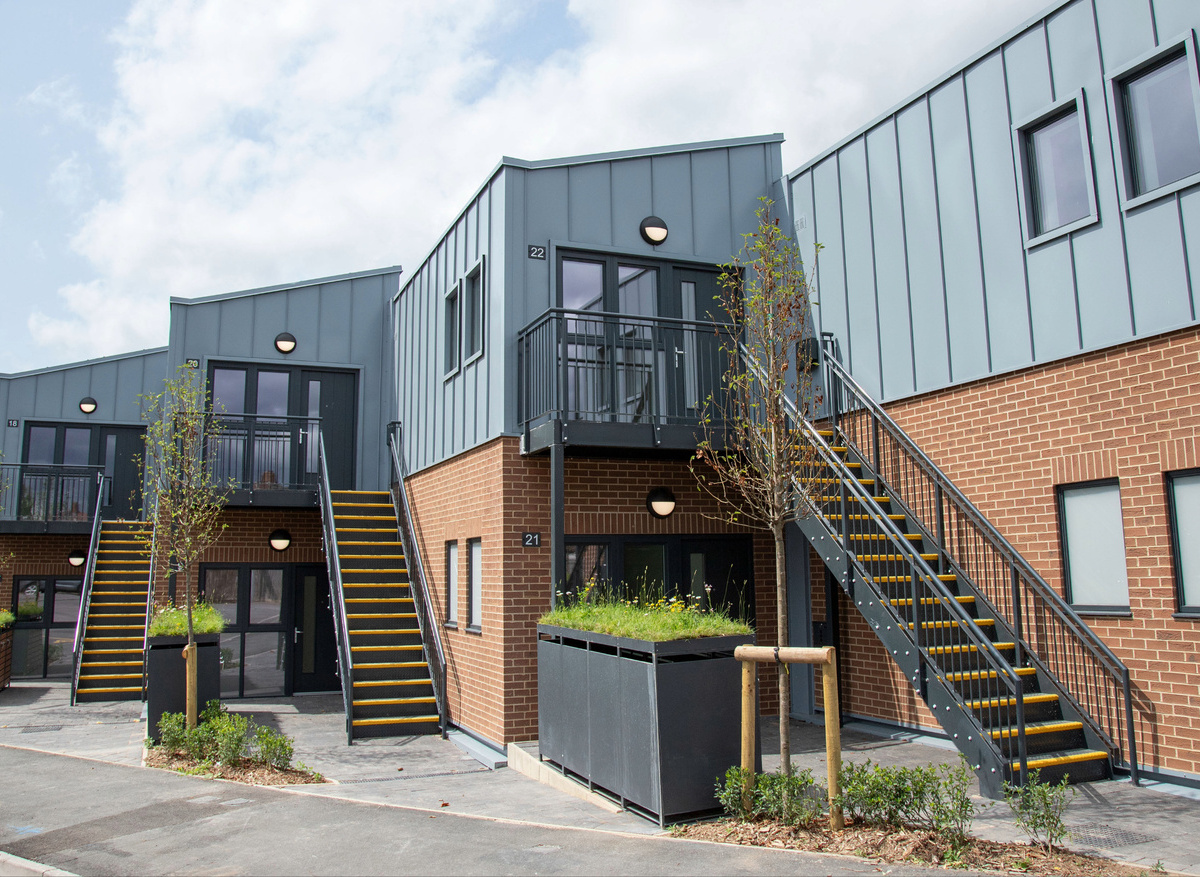
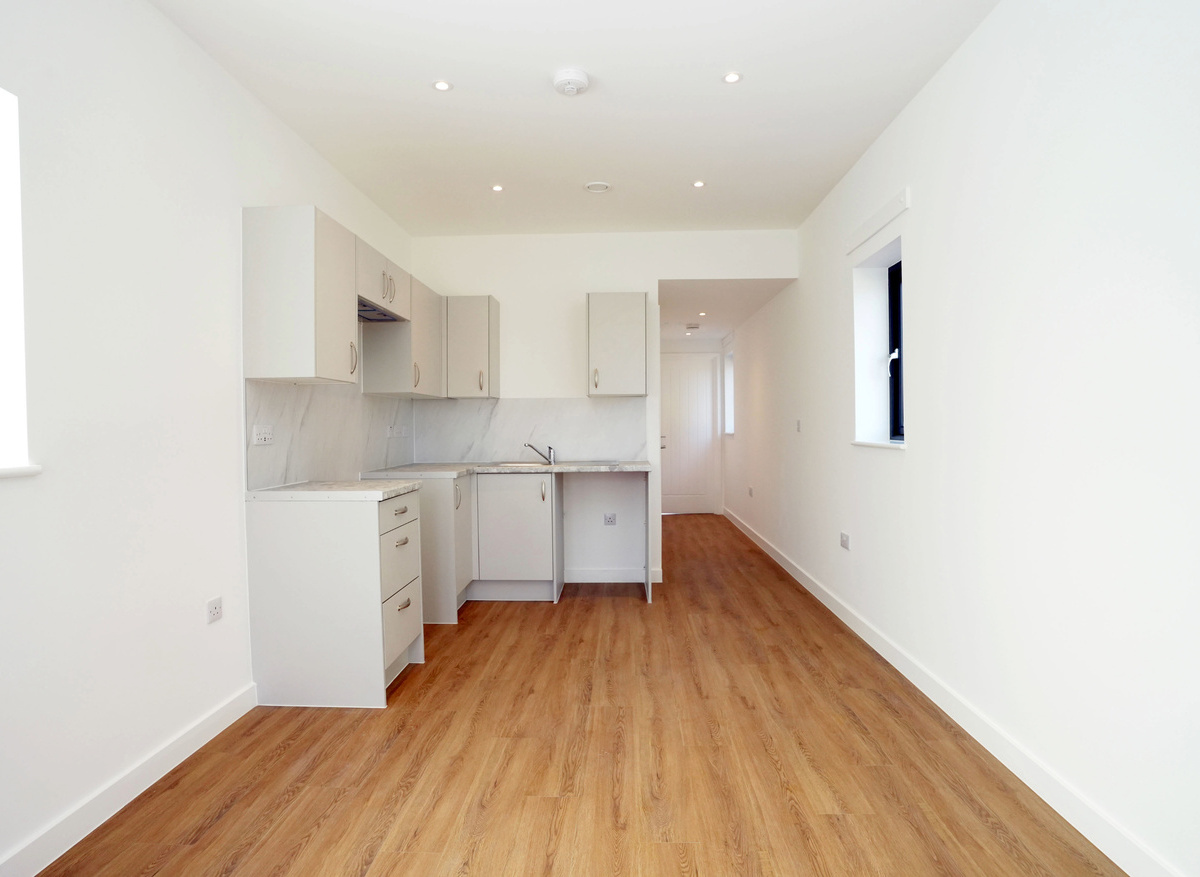
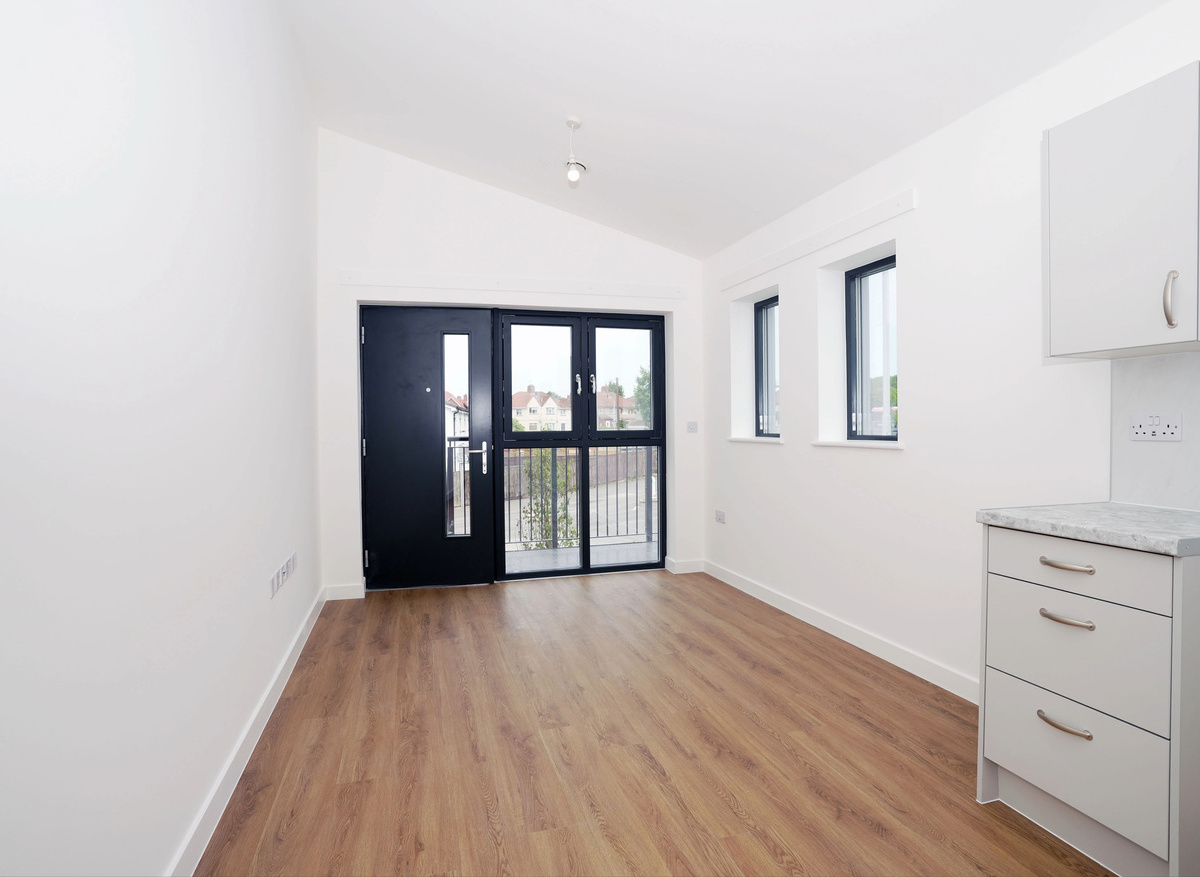
Marshall Walk is a twelve-home social housing development at Inns Court in south Bristol, delivered by ZED PODS for Bristol City Council. It provides twelve self-contained 1B1P homes of 37m² each for single-person households, around half of them for residents moving on from homelessness, on a long-derelict brownfield plot beside the Inns Court Community and Family Centre.
Its distinguishing feature is that it should not have happened at all. The site had a consented modular scheme that stalled for several years following the insolvency of the original MMC contractor — the kind of failure that tends to end a small affordable housing project permanently and, more damagingly, erodes a client's confidence in offsite construction altogether. ZED PODS, a CIAT Chartered Practice, was appointed in early 2024 not to start again but to reassess the approved design, resolve the technical and delivery risks that had defeated it, and convert it into something manufacturable. Foundations began in November 2024, modules arrived in January 2025, and practical completion was achieved in July 2025.
Lalit Chauhan FCIAT, Design Director at ZED PODS, said:
We are building far more than a building. We are building the foundations for 12 residents to live with dignity, independence, and the lowest possible energy bills. By designing a building that takes care of itself, we enable its residents to focus on building their own futures.
The recovery brief was unusually constrained. The team had to preserve the approved planning principles, footprint and community intent — losing consent would have meant losing the project — while rebuilding the scheme around Category 1 volumetric DfMA principles, on a tight budget, on a difficult site, without a material extension to programme.
The plot sits between residential gardens, local shops and a community centre, and falls steeply north to south. Three interlocking constraints had to be resolved together: the level change, transportability of complete modules through local roads, and privacy and daylight for both new residents and existing neighbours. Solving any one in isolation would have compromised the others.
The resolution is a good illustration of architectural technology doing structural work on a design rather than servicing it. The modular layout was stepped in 225mm increments to follow the natural gradient — a dimension chosen because it is a standard blockwork course height, so the groundworks contractor could set out the stepped substructure using ordinary trade practice rather than bespoke detailing. This single decision let the buildings follow the ground profile instead of forcing a cut-and-fill platform, reduced perceived height, cut earthworks and simplified access and assembly.
The modules were manufactured by Dragonheart Homes in a BOPAS-certified facility in Peterborough to around 80–85% completion, with windows, doors, steelwork, insulation, membranes, cladding and roofing integrated before delivery.
Offsite manufacture ran in parallel with groundworks and early enabling works, including mains water and BT diversions, which were sequenced into the programme rather than allowed to delay it.
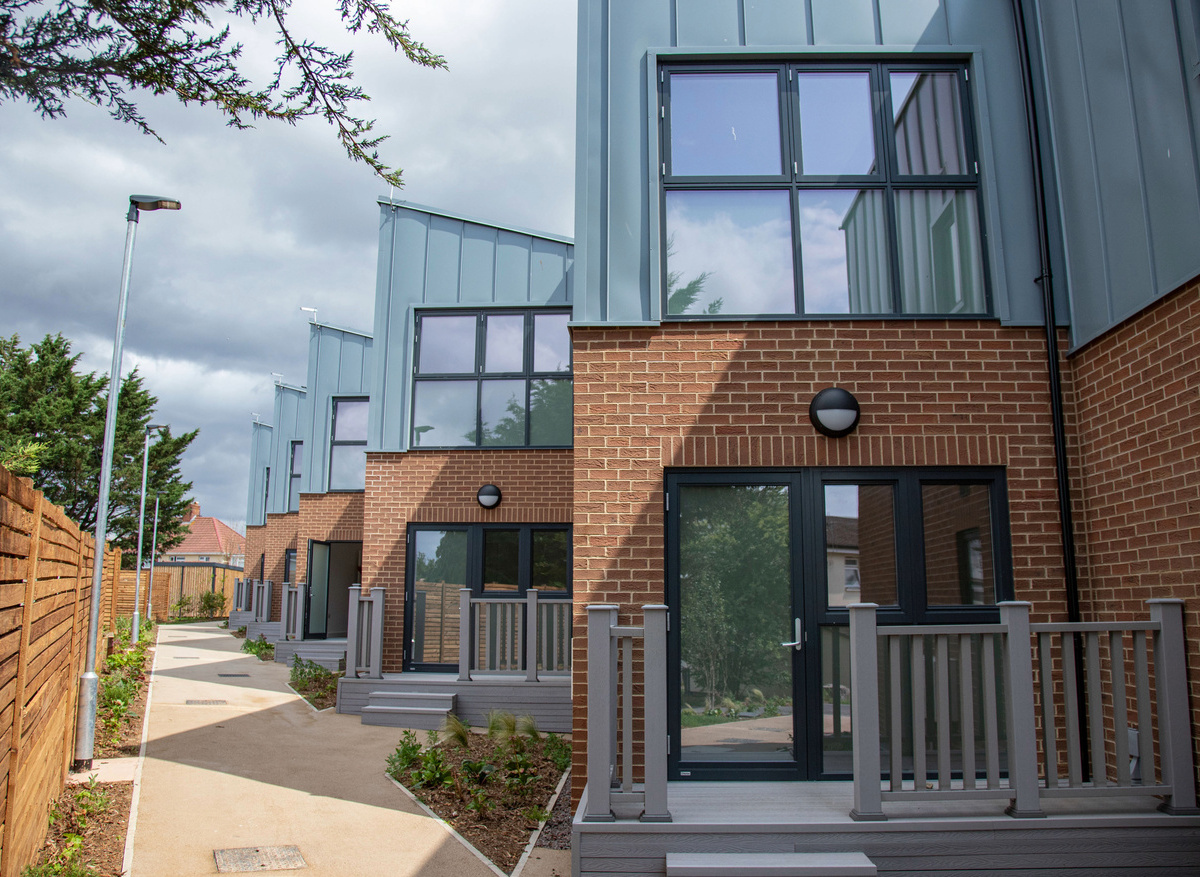
All twelve modules were installed in three days in January 2025. On a constrained urban plot bordered by homes, shops and an operating community centre, compressing the highest-risk activities into three days materially reduced exposure — for the workforce and for neighbours — along with vehicle movements, noise, material storage and site waste. The project was delivered with zero reportable accidents.Inclusivity was designed in rather than added. All homes have independent private entrances, giving residents dignity and autonomy — significant for a scheme housing people moving on from homelessness.
The development is car-free, with a designated disabled parking space, two large secure cycle stores, well-lit pedestrian routes and walkable links to shops, buses and the community centre.
The homes are zero operational carbon and use no gas. A fabric-first envelope combines high insulation levels, airtight construction and triple-glazed high-performance windows and doors with solar-assisted air-source heat pumps and mechanical ventilation.
The most significant performance gain came from the redesign of the roof. The consented scheme carried just three PV panels per building roof; ZED PODS increased this to fourteen, giving 84 panels across the development and seven per home at 3.08kWp — up to 3,000kWh of clean electricity per home per year. Annual carbon savings total 12.6 tonnes, with water savings of 141,474 litres.
Externally, red brick and metal cladding respond to the neighbouring context while providing a robust, low-maintenance envelope.
Biodiversity net gain reached 24%, fourteen points above requirement, through permeable landscaping, green roofs, wildlife corridors, defensible planting and a new public pocket park.
Councillor Barry Parsons, Chair of Bristol City Council's Housing Delivery Committee, described the scheme as an "example of using innovation to
bring homes forward" and the "best use of a difficult site". The project was featured in Deutsche Welle's documentary Brownfield Regeneration, seen by more than 180,000 viewers worldwide, and was chosen as the venue for Lloyds Bank's announcement of its Small Sites Aggregator Scheme with Homes England.
Small in scale, Marshall Walk is a demonstration that architectural technology can rescue a failed project, restore sector confidence in MMC and unlock constrained urban land that would otherwise stay derelict.