Words by John Grant, Nottingham Trent University
Kirkby Observatory is a proposal for a new observatory and planetarium located on a 3.3-hectare site adjacent to Kirkby Stephen Business Park in Cumbria, developed as a hub for scientific research, public education, community engagement, and tourism.
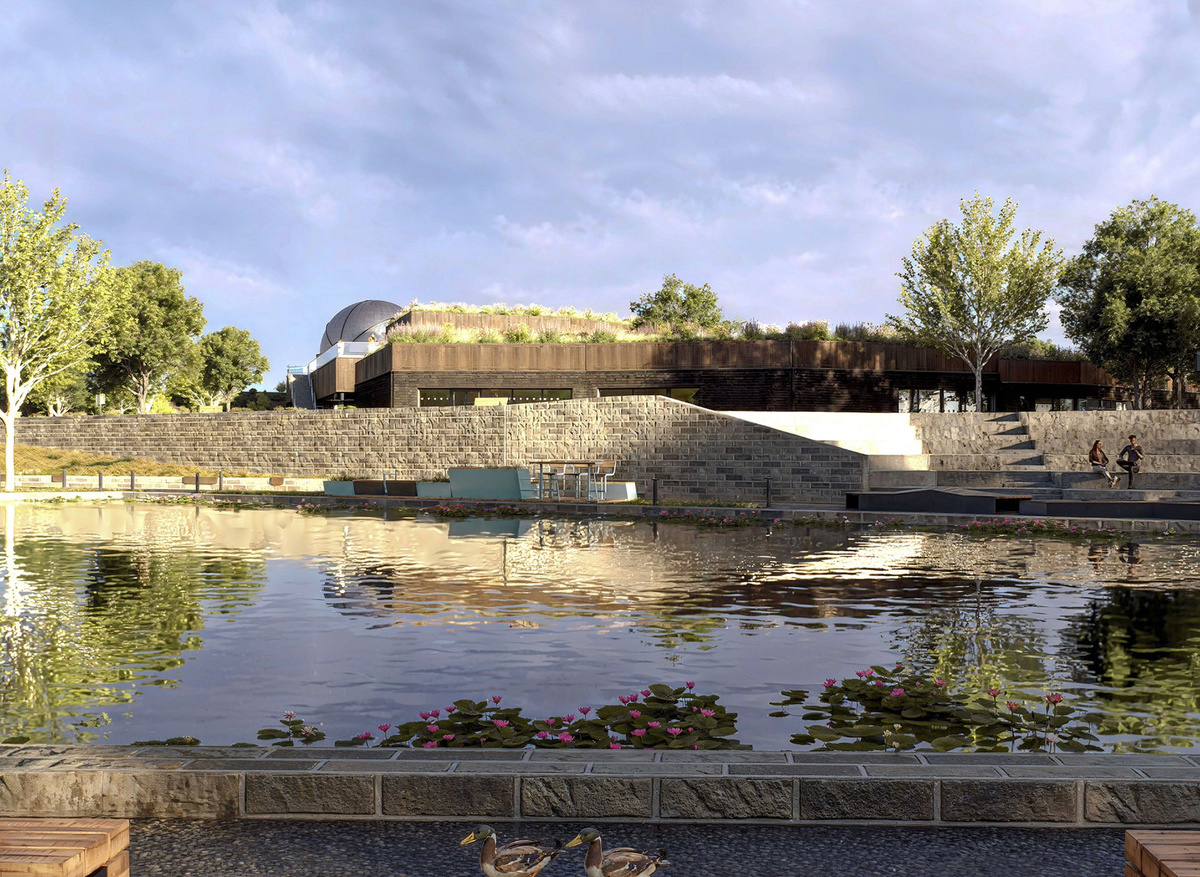
Combining specialist research facilities with educational, community, and commercial spaces to create a year-round destination for residents and visitors, the project develops an allocated employment site, currently used for livestock grazing, by introducing new public green spaces while supporting long-term economic, social, and environmental development within the region.
Located between the Yorkshire Dales National Park and the North Pennines, Kirkby Stephen benefits from Bortle Class 3 dark skies, providing an ideal setting for astronomical observation, while remaining highly accessible. The project seeks to create a destination that balances scientific research with public accessibility, encouraging future generations to engage with astronomy while providing facilities capable of supporting professional observation and education. Alongside these specialist functions, the proposal aims to establish a vibrant community hub offering educational spaces, commercial opportunities, and publicly accessible landscapes.
The design prioritises net-zero operational carbon, inclusive access, low-embodied-carbon construction, and protection of the surrounding dark-sky environment, ensuring it contributes positively to the future growth of Kirkby Stephen.
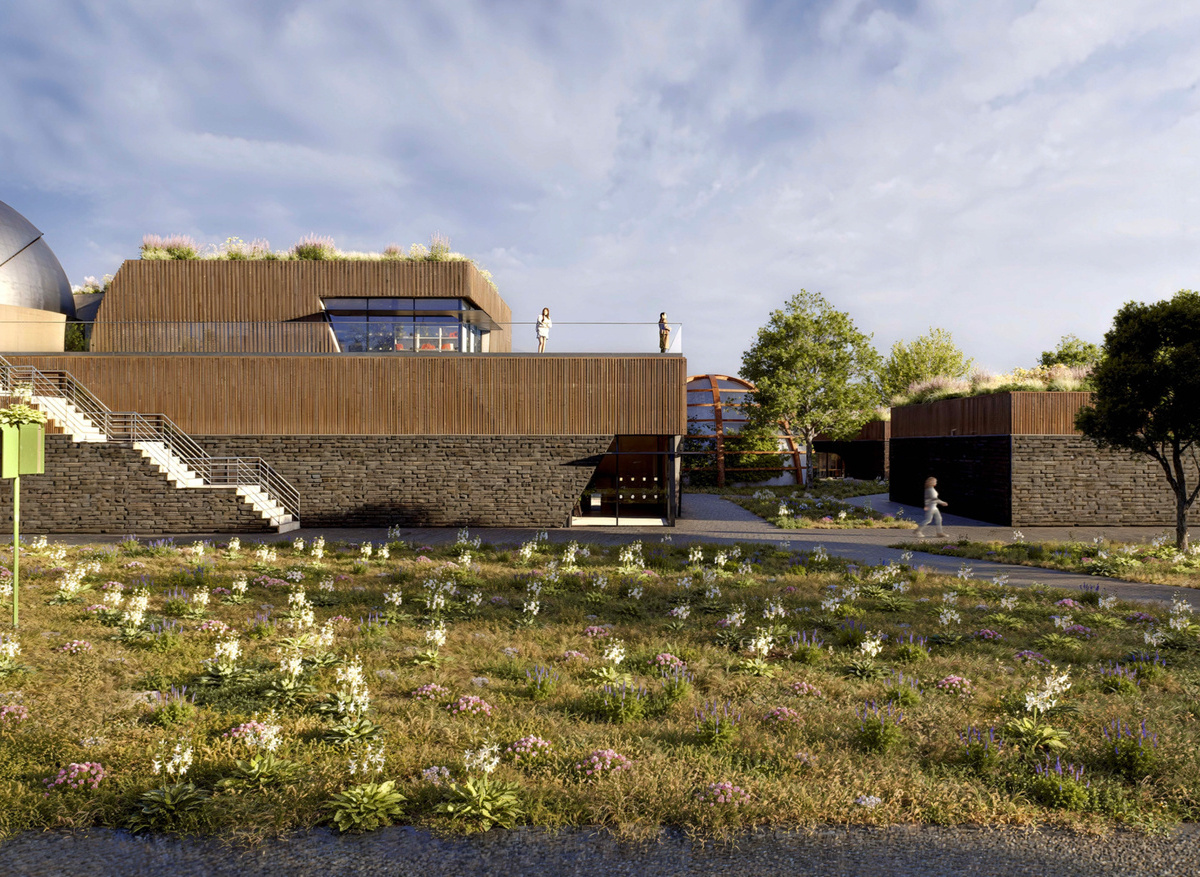
Environmental analysis directly shaped the project's sustainability strategy. Extensive green roofs, biodiversity enhancements, and passive environmental design principles were integrated to improve ecological performance while responding sensitively to the rural context.
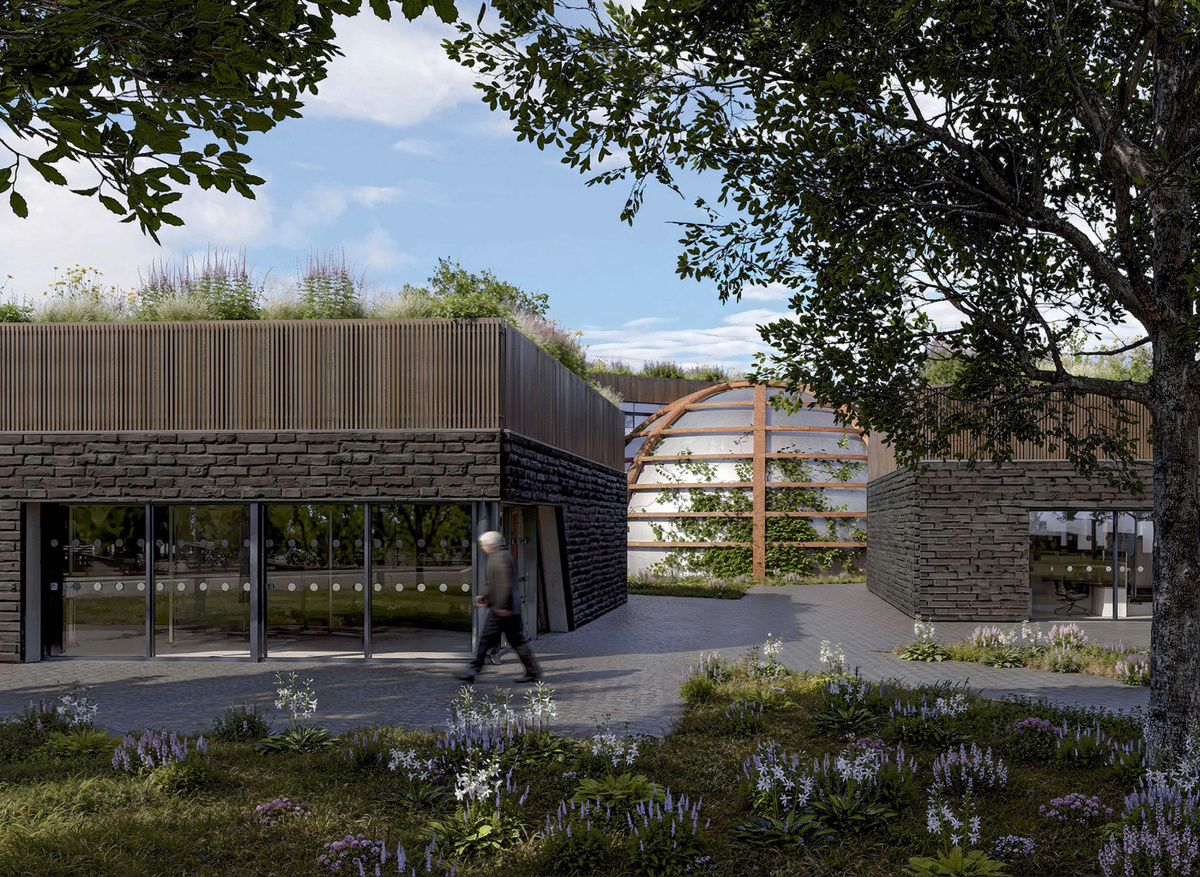
The proposal adopts a low-rise campus arrangement made up from four distinct buildings, separating public, educational, research, and commercial functions into a simple and easy-to-navigate layout.
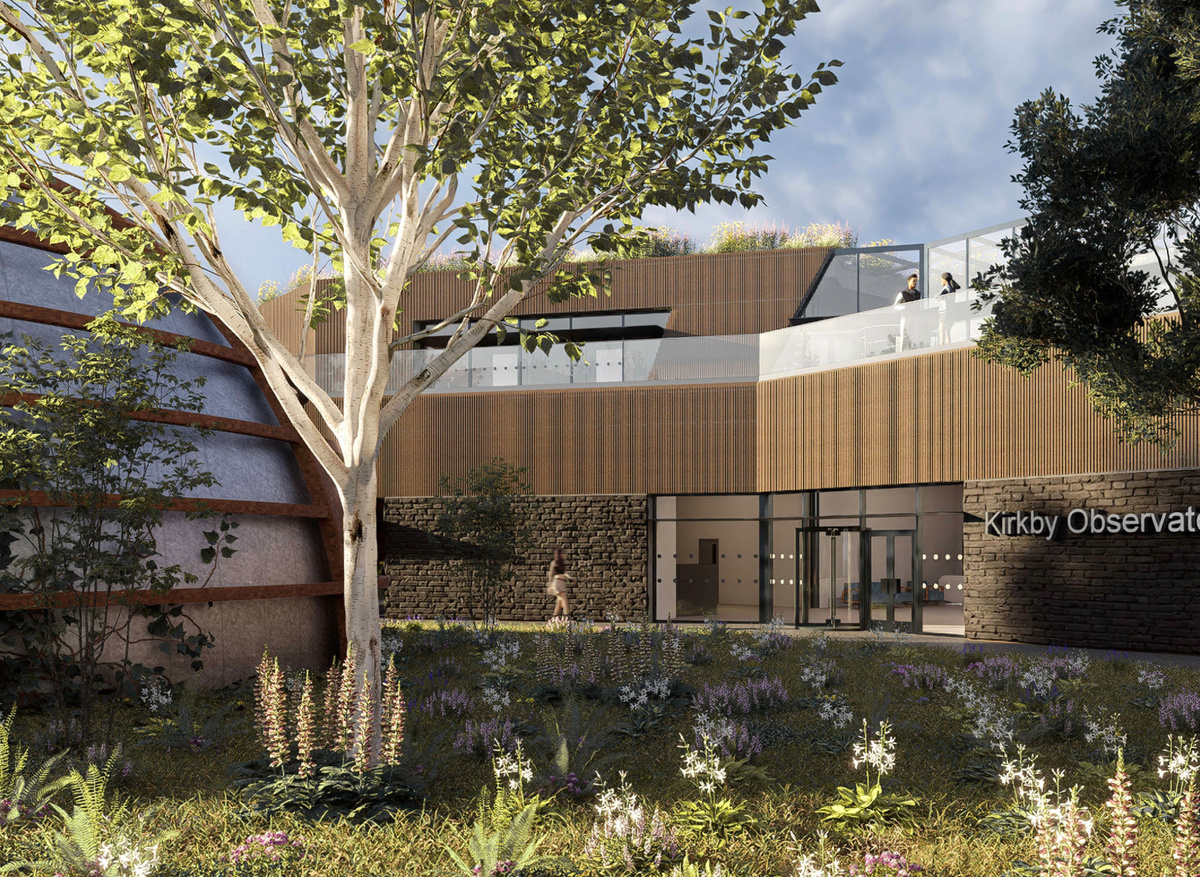
Material selection reinforces both environmental performance and local identity. Locally sourced Kirkby limestone establishes a strong connection with the surrounding built environment while reducing transportation impacts. A non-structural timber frame surrounds the planetarium to support future vegetation growth, allowing the building to integrate naturally into the landscape over time.
Passive environmental strategies further support the design concept. South-facing façades incorporate electrochromic glazing to regulate solar gain while reducing light spill into the surrounding dark-sky environment.
Renewable energy generation is achieved through photovoltaic canopies positioned across the site car park and was validated using two independent solar analyses.
Bio-based construction materials further enhance the environmental performance of the envelope. The Mykor MycoSIP wall system incorporates mycelium-based insulation as a renewable alternative to conventional insulation products.
Ultimately, Kirkby Observatory showcases how architectural technology can integrate technical innovation, environmental responsibility, and community benefit within a single coordinated development.
Through evidence-based design, sustainable construction methods, and carefully considered technical solutions, the project creates a resilient and adaptable facility, capable of supporting scientific research, inspiring future generations, and contributing positively to the long-term enrichment of Kirkby Stephen.