Burnham the Builder
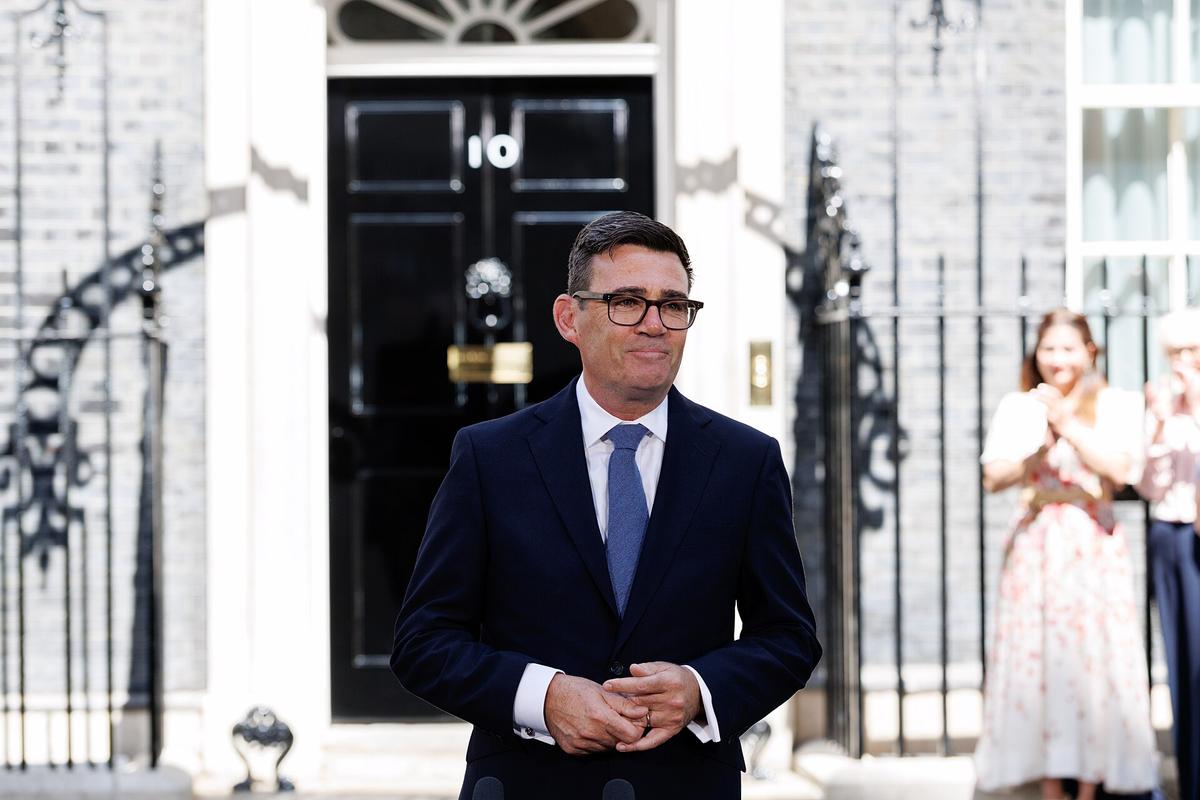
On Monday, after a leadership contest that was neither exciting nor informative, the new Labour Party leader, Andy Burnham was invited to form a government by the King.
Which means that we can finally stop speculating about his potential plans, and start assessing his actual decisions, and what they mean for the built environment sector.
To govern is to choose
Innumerable column inches have been devoted to who would be in Prime Minister Burnham’s cabinet. The big question was whether Ed Miliband (formerly Secretary of State for Energy, Net Zero and Climate Change) or Shabana Mahmood (formerly Home Secretary) would get the role of Chancellor.
On this one, Burnham wrong-footed everyone, instead appointing John Healey (while keeping Mahmood as Home Secretary and installing Miliband as Foreign Secretary).
Healey resigned as Secretary of State for Defence last month, when Keir Starmer and Rachel Reeves did not agree to the levels of defence investment Healey felt was needed. Now Healey has the job of finding the money to deliver that Defence Investment Plan, and every other spending commitment which Burnham is considering.
This will be a tall order, but it seems as though his instincts are well aligned with Burnham’s. Healey served as a junior Treasury Minister when Gordon Brown was Chancellor, and has been critical of “Treasury Orthodoxy”, so may be willing to spend money in new ways, or do more to invest outside the greater southeast. Given Burnham has been criticising post-Thatcher de-industrialisation in recent speeches, this flexibility will be important.
It’s also worth noting that Healey was Shadow Housing Secretary between 2015 and 2020, so is likely to understand the issues facing our sector, even if he takes a little while to get fully up to speed.
The Queens’ Gambit
Of course, the press speculation wasn’t all wrong. The big thing which the press got right was the fate of the so-called “Northern Queens” – the northern women MPs who were instrumental in orchestrating Burnham’s return to Westminster.
As widely predicted, Louise Haig has been appointed Chancellor of the Duchy of Lancaster – this is a “fixer” role, and it is likely that Haig will be Burnham’s de facto deputy (Burnham hasn’t formally appointed a Deputy Prime Minister). In particular, she will probably be involved in setting up and running “Number 10 North”, whatever that means in practice (requiring some close working with the Ministry for Housing, Communities and Local Government, which is responsible for devolution).
Meanwhile Anneliese Midgley has been given the role of Chief Whip, responsible for managing the Parliamentary Labour Party, which was an area where Starmer was widely seen to have fallen short.
Plus ça change...
Lots of senior Starmer supporters (including Rachel Reeves, the Chancellor, and David Lammy, the Deputy Prime Minister) have left government. But in the Ministry for Housing, Communities and Local Government we’ve seen something more like continuity (if Steve Reed is viewed as a temporary aberration), with Angela Rayner returning as Secretary of State (following the resolution of her issues with the taxman).
In his campaign, Burnham said he wants to see a big increase in council house building. Rayner shares this outlook – she has made no secret of how important the stability of her council home was to her as a single mum who left school with no qualifications. We can expect Rayner to be a prominent figure in the Government, as she refocuses on delivering homes, as well as tackling building safety and continuing renters’ rights reforms. With Burnham also emphasising devolution as a priority, Rayner and her team are likely to have their work cut out.
Alongside Rayner, Matthew Pennycook has been kept in post as the Housing and Planning Minister, but will now be one of a small number of Junior Ministers who attend Cabinet alongside the Secretaries of States. Meanwhile Florence Eshalomi has moved from poacher to gamekeeper. She was previously responsible for scrutinising MHCLG’s work as Chair of the Housing, Communities and Local Government Select Committee, but now takes on a junior role in the department. Prime Ministers don’t always choose to appoint based on experience in this way; that Burnham has done so is further evidence of the importance of this policy area to his project.
...Plus c'est la même chose
We’ve seen similar semi-continuity at the Department for Energy Security and Net Zero (which is responsible for the Warm Homes Plan). Miatta Fahnbulleh, who was Minister for Energy Consumers between 2024 and 2025, has now been installed as Energy Secretary, and I would expect a degree of continuity with Ed Miliband’s approach from her.
Fahnbulleh is something of a rising star in the Labour Party, with a strong economics background, and she has been doing lots of policy work for Burnham. So, she’s likely to have quite a high profile in this administration.
Elsewhere, Heid Alexander remains as Transport Secretary, with Pat McFadden kept as Work and Pensions Secretary. Jonathan Reynolds has also returned to his first Starmer role, leading a beefed-up Department of Business, Innovation, Science and Trade, which now includes responsibility for (some) AI policy.
Setting the policy direction
Early signs are that Burnham is leaning into Labour’s more interventionist instincts.
As I mentioned, before taking office, Burnham talked about delivering the largest increase in council housing since the post-war era (apparently recognising that commercial delivery alone simply won’t deliver homes at the pace and scale needed). On the steps of Downing Street yesterday, Burnham announced he would end rough sleeping (something he previously tried to do in Manchester, with only partial success). On his first full day in post, he announced the removal of VAT on domestic energy, while on the second, he lowered the cap on bus fares. More announcements are expected to follow, with rumours circulating of plans to bring water companies into public ownership and deliver (forever-delayed) reforms to social care.
While some of these changes are limited in scope and scale (rough sleeping is only the tip of the homelessness iceberg, and removing VAT on energy bills won’t close the spark gap that punishes people who adopt clean heating), many address very visible signs of state failure. Put them together and it would seem that Burnham is prioritising smaller wins which illustrate the larger reforms he wants to deliver over time. If this works, and he can point to visible improvements in the social fabric and cost of living, Burnham might be able to solve the communication challenge which bedevilled his predecessor and secure an election victory in 2029.
All in all, while it’s still early days, the outlook seems to be continuity for our sector in terms of people and policy. If anything, housing and the built environment are likely to be even more prominent than they were before.
While questions remain over how Burnham will fund everything, overall, it’s still a good time to be an AT!