
Eclipse Leisure Centre
Words by GT3 Architects
One of only four completed Passivhaus leisure centres in the world, and the largest globally in both scale and diversity of facilities, Eclipse Leisure Centre stands as a landmark achievement in sustainable public architecture.
Designed by AJ100 practice GT3 Architects, the £50M centre has raised the bar for low-carbon sport and leisure facilities, blending a people architecture approach with industry-leading Passivhaus design techniques. Hailed as a global blueprint for sustainable leisure, this approach has delivered substantial operational savings, offering an exciting community destination safeguarded from energy price volatility, environmental uncertainty and evolving social trends.
With ambitions to create an exciting new leisure destination flexible enough to meet the evolving and varied needs of the growing community, Spelthorne Borough Council first approached GT3 in 2017. Extensive community consultation followed, including physical workshops, engagement sessions and online and doorstep surveys to ensure the design suited all stakeholders.
Mark Gowdridge, director at GT3 Architects, said, “Any good design starts with active consultation. One of the great successes – before Passivhaus was even mentioned – was prioritising hard-to-reach groups in the community. Understanding why typically underserved groups struggle to use and enjoy traditional leisure facilities led to key design choices, including stronger park connections, accessibility and inclusivity that goes far beyond standard building regulations and environmental concerns across the interior.”
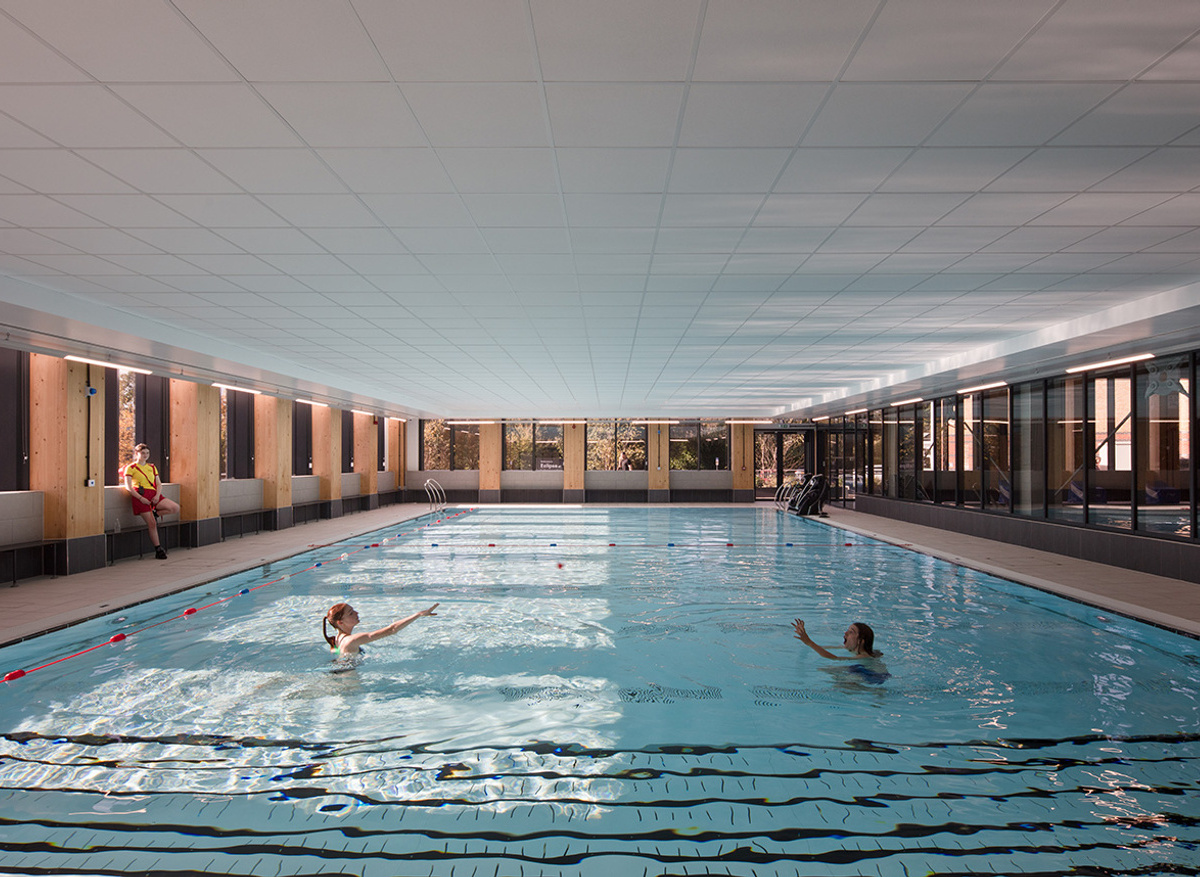
The result is a state-of-the-art facility featuring an eight-lane swimming pool with a 250-seat spectator gallery, and a dedicated learner pool with full-width self-depositing steps, a children’s splash zone, steam room and sauna. Fitness enthusiasts benefit from a new 200-station gym, three studio spaces, including a spin studio, and two physiotherapy consulting rooms.
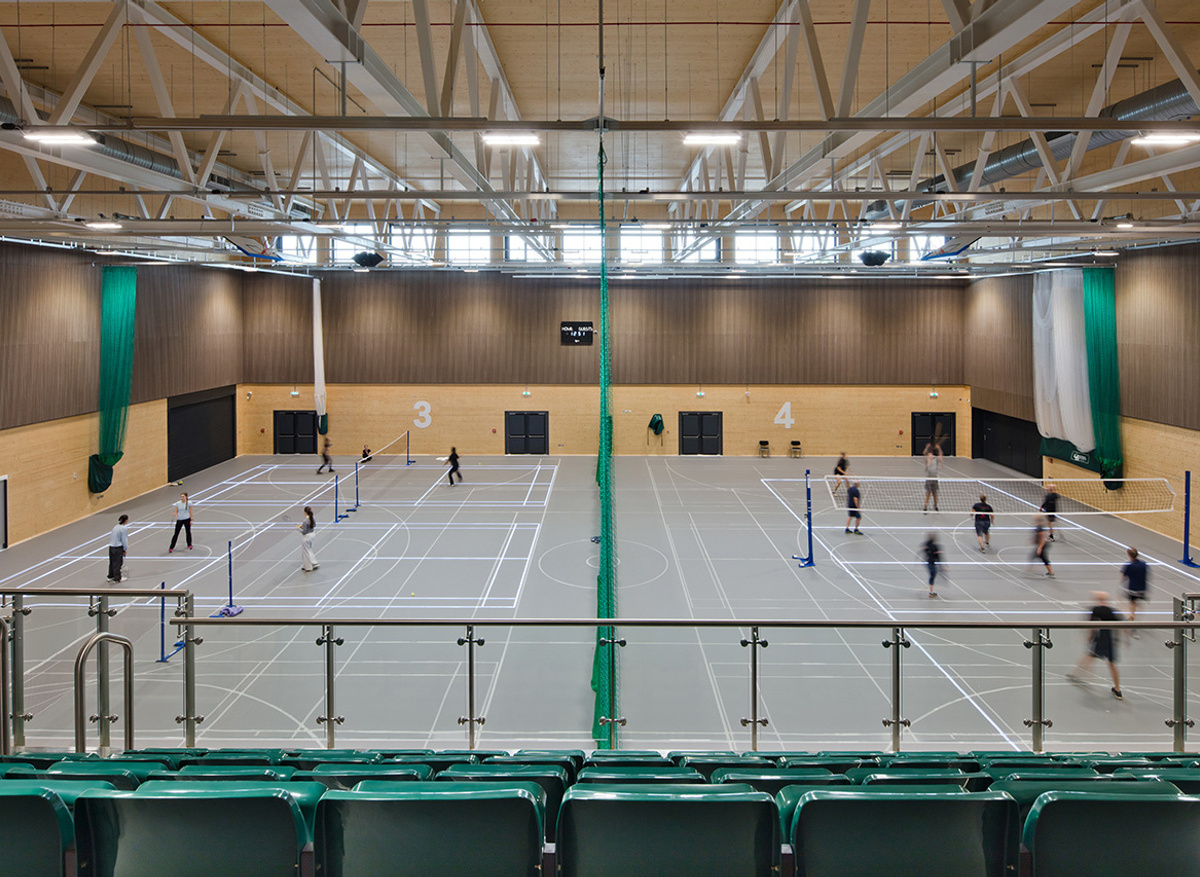
Elsewhere, Eclipse offers a six-court sports hall with seating for 200, three adaptable squash courts, a Clip’n’Climb interactive climbing wall, a 100-cover café and soft play areas for community use. Smart spatial planning maximises every level of the site, including four rooftop artificial pitches and dedicated rooftop community gardens.
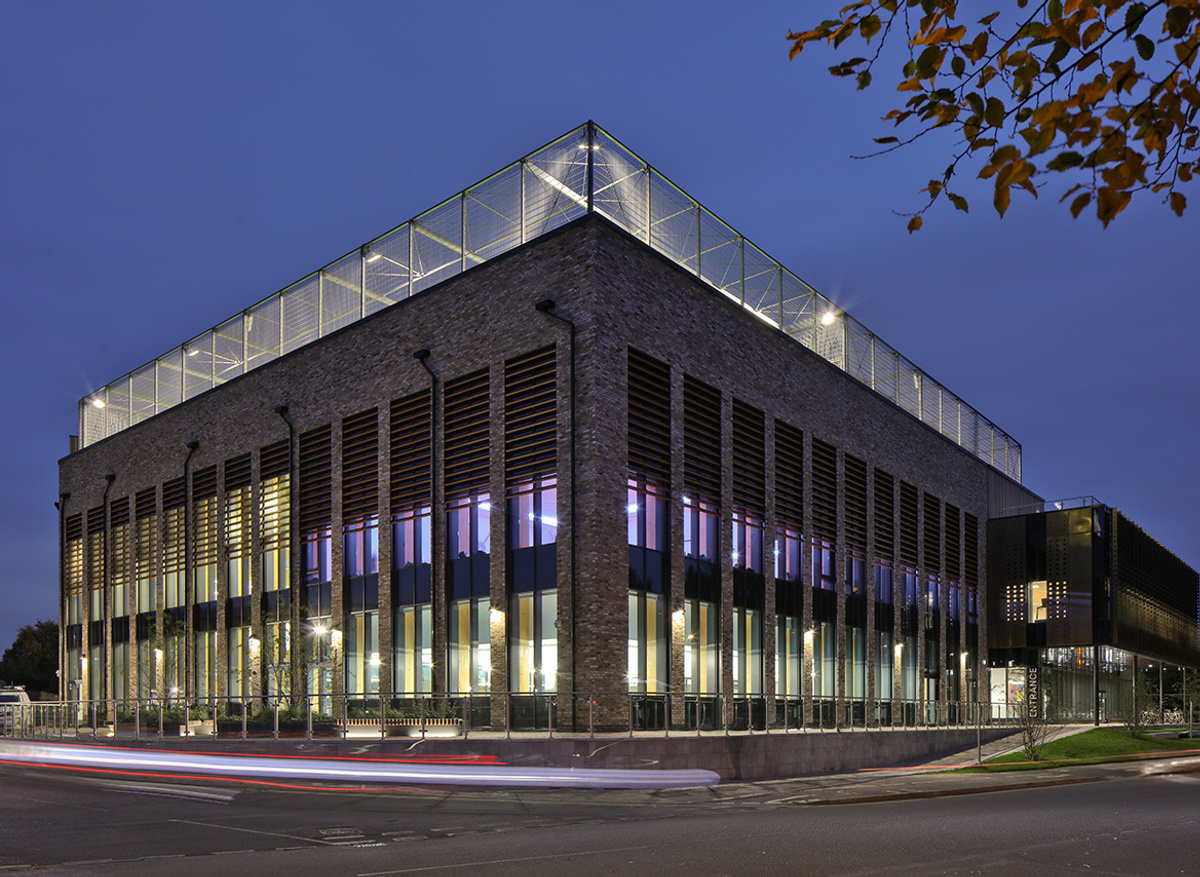
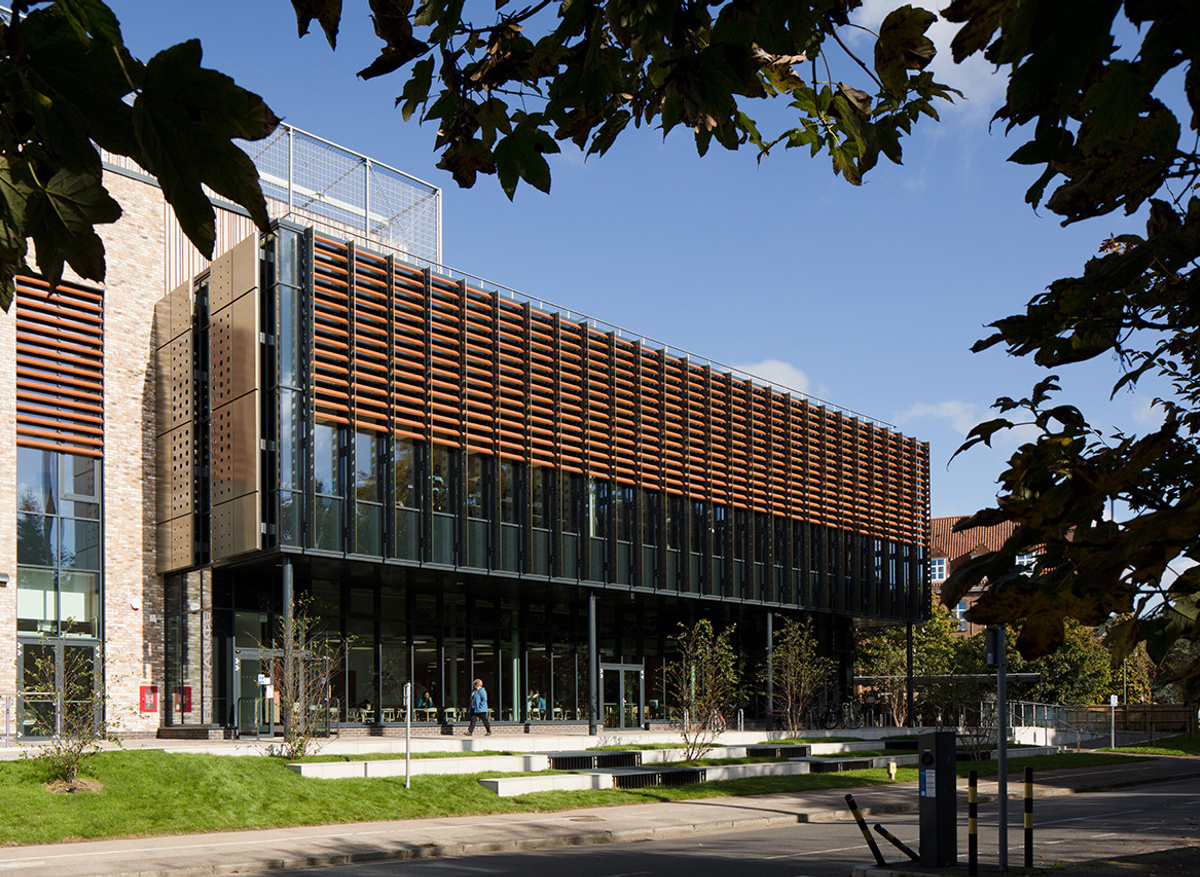
The design concept draws on local form, colour, structure, and materiality. A stacked layout was adopted to make full use of the 9,000 square metres available, with an integrated interior design strategy ensuring visual consistency throughout. The building envelope features a thoughtful mix of brick, glazing, timber louvres, and metallic façades, while windows are detailed with encased glazing and timber louvres for both function and aesthetic appeal.
Inclusive design elements such as Makaton signage and movable studio walls enhance accessibility, and LED-lit sports courts improve visibility for individuals with visual impairments by clearly highlighting court lines.
Following Spelthorne Borough Council’s 2020 climate emergency declaration, the project brief was boldly redefined to prioritise carbon reduction and long-term climate resilience. After extensive consultation, the council committed to the rigorous Passivhaus standard; widely regarded as the global gold standard benchmark for ultra-low energy construction.
The project’s success centred on the application of Architectural Technology as a core discipline from the outset. Josh Wardle, building biologist, senior architectural technologist and certified Passivhaus specialist at GT3 Architects, said, “We took an extremely detailed approach to make sure we met the high standards required for Passivhaus certification, with more than 500 drawings created and very controlled standards in place.
Mark continues: “Mapping complex technical requirements to such a mixed wet and dry leisure typology was an exciting challenge, and one that pushed us to look at new and better design techniques and approaches. These techniques are now being applied to leisure facilities across the UK – not just those looking to achieve certification. One of the most enjoyable areas was understanding how the technical decisions and learnings needed for Passivhaus could also support the social ambitions and ‘people architecture’ themes agreed at the project’s outset.
“By optimising orientation, glazing ratios, internal thermal zoning and incorporating low-energy systems along with heat recovery processes to transfer energy between zones, the design achieved operational energy savings of up to 60% compared to traditional approaches.”
-
-
-
-