Connecting knowledge, technology and conservation: Building competence for the future of built heritage
The conservation of historic buildings and places is increasingly recognised as a complex, interconnected challenge. Protecting built heritage requires more than technical expertise in individual disciplines; it depends on collaboration between owners, policymakers, administrators, architectural technologists, architects, engineers, specialists, researchers and other building/technology professionals.
Historic assets are affected by physical change, environmental pressures, evolving materials, social expectations and new digital approaches to understanding and managing information. Addressing these challenges requires people from different backgrounds to share a common understanding of conservation principles and develop an ability to make informed decisions.
This means recognising structural change, diagnosing deterioration, understanding context and applying international guidance, legislation and ethical standards. It also requires individuals to understand the limits of their own expertise, identify when specialist knowledge is needed and communicate effectively across other disciplines.
For the digital technology sector, this shared understanding is increasingly important. Digital tools, data capture, modelling, monitoring systems and emerging technologies can only support conservation effectively when they are applied within a clear understanding of heritage values and decision-making processes.
This article seeks to make you aware of the range of COTAC material that is freely available to download from www.cotac.global.
COTAC's digital learning approach
COTAC’s online learning framework has been developed to support this wider understanding through accessible, structured self-learning resources available through the Learning Menu at:
The programme is structured and based on the International Council on Monuments and Sites 14-point Education and Training Guidelines, providing an internationally recognised foundation for understanding the skills and responsibilities involved in caring for built heritage.
The learning approach is designed around progressive development as follows:
Appreciating (green box) → Being Aware of (orange box) → Becoming Skilled in (blue box)
It allows learners to begin with an understanding of why heritage matters, develop awareness of conservation challenges and progress toward more informed professional engagement.
COTAC Understanding conservation online structure
The diagram below illustrates how the COTAC learning ecosystem connects different audiences, resources and outcomes. The green, orange and blue boxes equate to “lay learning”:
- green box (general lay + craft + school), slightly more advanced “awareness”
- orange box (student + general professional), then covering those who are “skilled in”
- blue box (conservation professionals).
The diagram then identifies which of COTAC learning documents directly apply to the three identified learning cohorts – this is defined by the containing broken blue line boxing.
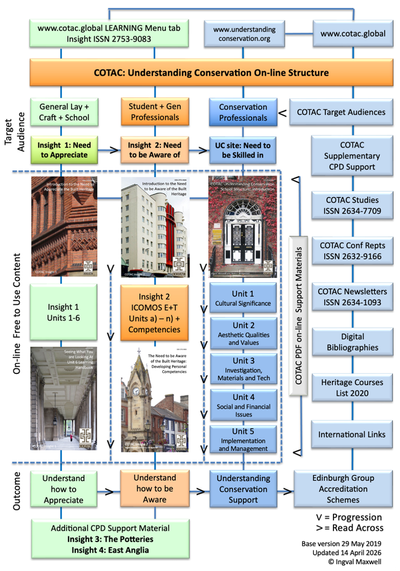
The structure demonstrates how different learning pathways support different levels of engagement:
Insight 1: The Need to Appreciate the Built Heritage
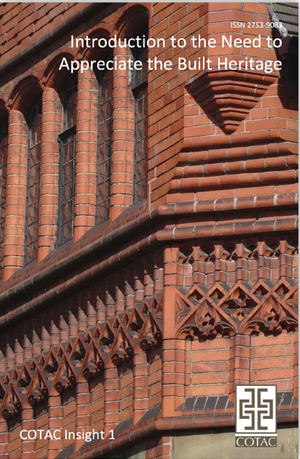
Designed for a broad audience including general learners, craft professionals and those beginning their conservation journey.
This stage introduces the fundamentals of conservation through six learning units covering:
- Understanding heritage significance
- Observing and interpreting historic places
- Appearance and character
- Building performance
- Conservation challenges
- The consequences of intervention
The aim is to develop an informed appreciation of the built environment and the reasons why it requires careful consideration.
Insight 2: The Need to be Aware of the Built Heritage
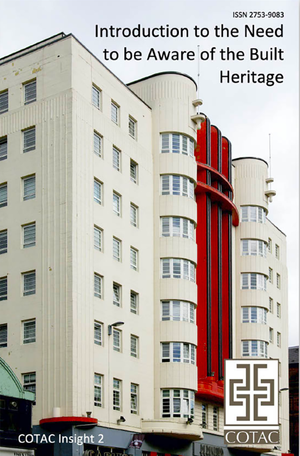
Building upon this foundation, Insight 2 develops a deeper awareness of conservation principles and introduces the ICOMOS Education and Training Guidelines.
It includes:
- Exploration of the fourteen ICOMOS guideline areas
- Annotated image-based learning resources
- Supporting digital bibliography and references
- Development of personal competencies
This stage encourages learners to consider how conservation decisions are made and how different forms of knowledge contribute to successful outcomes.
Developing Personal Competencies
A key part of Insight 2 is the additional volume:
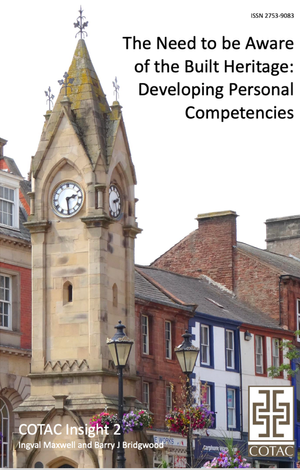
This resource focuses on differing but developing ability individual roles within the wider conservation process.
Rather than concentrating only on technical knowledge, it encourages reflection on:
- How decisions are formed
- How evidence is interpreted
- How different specialists collaborate
- How responsibilities are shared
- How professional judgement develops
The material explores fourteen personal competencies aligned with the ICOMOS guidelines and presents them through five structured parts.
These competencies are particularly relevant in a technology driven environment where successful conservation depends on collaboration between heritage specialists and digital innovators.
Becoming Skilled in Conservation Support
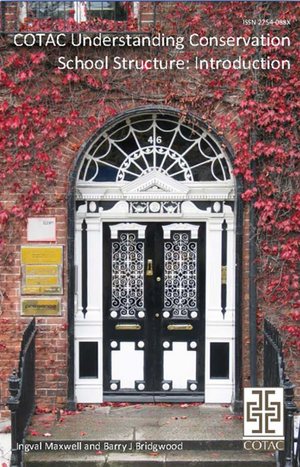
The next stage of the learning pathway supports those seeking a more advanced understanding of conservation practice.
The “Understanding Conservation” programme consists of five units:
- Cultural Significance
- Aesthetic Qualities and Values
- Investigation, Materials and Technology
- Social and Financial Issues
- Implementation and Management
This stage links conservation philosophy with practical application, supporting professionals involved in managing, researching and delivering conservation activities.
Creating a shared language between heritage and technology
The future of built heritage depends on stronger connections between various but contributing disciplines.
Digital Technology can transform how historic places are recorded, analysed, monitored and managed. However, successful innovation requires an understanding of the values, responsibilities and decision-making processes that define conservation practice.
COTAC’s learning framework provides a bridge between these technical/professional worlds by creating a shared foundation of knowledge.
Through structured online learning, downloadable resources and internationally aligned guidance, the programme supports a growing community of informed contributors — from heritage professionals to digital technology specialists — working together to protect the built environment for future generations; in addition: it accommodates those at a lay and learning level in order to gain a basic but ‘appreciative’ understanding of conservation.