How plumbing and heating can elevate sustainability in new build properties
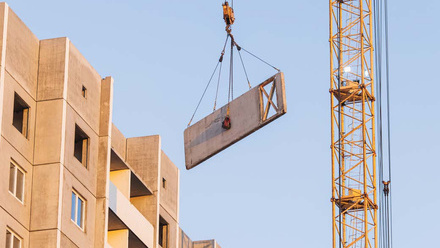
By the end of this government's term, the UK is aiming to deliver a total of 1.5 million new homes. These will represent around 5% of the country's total housing stock by 2029, making them an important marker on the route towards net zero by reflecting how sustainability can be prioritised through the construction of modern homes.
Regulations such as the Future Homes Standard are helping to re-shape the industry and ensure every new home maximises efficiency in every aspect, from construction through to everyday operation. As one of the biggest contributors to household emissions, plumbing and heating has a key role to play in creating better homes for the future.
By introducing energy-efficient plumbing and heating systems from the initial stages of a home’s design and construction and carefully selecting product solutions, specifiers can boost the longevity of installations, help drive progress towards the government’s net zero targets, and even cut costs for homeowners.
Plumbing and heating is an integral part of housing and collectively accounts for around a fifth of the UK’s total greenhouse gas emissions, so it is easy to see the positive effect that evolution in product specification can have. The Home Builders Federation suggests that 85% of new build properties achieving A or B EPC ratings are emitting 61% less carbon per year and making energy bills up to 55% cheaper than the average older home.
In recent years, we have seen heat pumps making a significant impact as an alternative to gas systems. With an energy efficiency rating that is three to five times higher than natural gas boilers, heat pumps present a greener alternative, helping to cut emissions in homes drastically, as well as operating costs for occupants.
Underfloor heating (UFH) is a second innovation which drives down energy consumption while keeping homes warm, efficiently. Crucially, UFH's operational efficiency puts less pressure on the home's heat source and reduces the amount of energy required to keep homes warm. It is important to remember that lower operating temperatures mean lower running costs for users. Also, with regular maintenance, UFH will outlive many radiator systems.
With looming housing targets, plastic pipes and fittings offer quick and straightforward installation, with no specialist tooling and no need for a hot works permit.
With more reliable individual connections through push-fit technology, non-corrosive materials, and push-fit technology, non-corrosive materials, and longer pipe runs due to its flexible properties, all of this results in less potential for leaks or corrosion. With more reliable operation comes a longer lifespan, ensuring that products do not require replacement as frequently.
Solutions, including plastic manifolds, also make it possible to centralise and distribute water feeds to maximise system efficiency. By establishing a centralised pipework junction, the system can optimise consumption and further minimise the potential for leaks.
Unlike copper, plastic will not corrode or oxidise, which guarantees long-term performance and ensures the system is less likely to be affected by factors such as the type of water the system is receiving, the quality of installation, or the frequency of use. Installers will also prefer to choose plastic for its flexibility, which makes cabling through joists and partitions much simpler.
It is also less susceptible to pitting and presents a more economical choice than copper and stainless steel. Five-layer barrier systems insulate the water so that expansion and contraction – due to natural temperature changes throughout the day – will only affect any metal fittings attached to the pipe, not the pipe itself. This reduces any potential risk of air ingress into the system, whilst reducing the noise that the system makes too.
Aside from the specifics of plumbing materials and heating systems, which form the foundation of sustainable plumbing and heating, specifiers should also consider the potential of water control valves. By controlling the flow of water throughout a property, valves can directly impact the efficient operation of plumbing and heating systems.
Pressure Reducing Valves (PRVs) help to optimise system performance, safety, and efficiency. PRVs manage pressure, giving the installers the option of managing the flow of water to appliances across the home. PRVs can also help to reduce consumption, supplying only what is required for the efficient operation of appliances and fixtures.
Where maintenance is concerned, service valves also enable the swift isolation of water to appliances and fixtures, optimising efficiency and making future maintenance works more straightforward.
By utilising plastic plumbing, underfloor heating and water control valves, you can use plumbing and heating to elevate sustainability in new build properties and futureproof newly built housing stock.
This article was featured in AT Journal issue 156