Enter the world's first mass timber data centre
For many, that computing power might appear abstract, but to account for this growth in demand we need real physical infrastructure in the form of data centres. These structures have an impact on the environment through carbon emissions generated by the power supplies they rely on, through to the large quantities of water they need for cooling.
One often overlooked environmental aspect of data centre development is the choice of construction materials, something that becomes immediately apparent when visiting a facility. Traditionally, steel and concrete dominate and therefore is an intuitive choice. However, these materials also come with a significant carbon footprint.
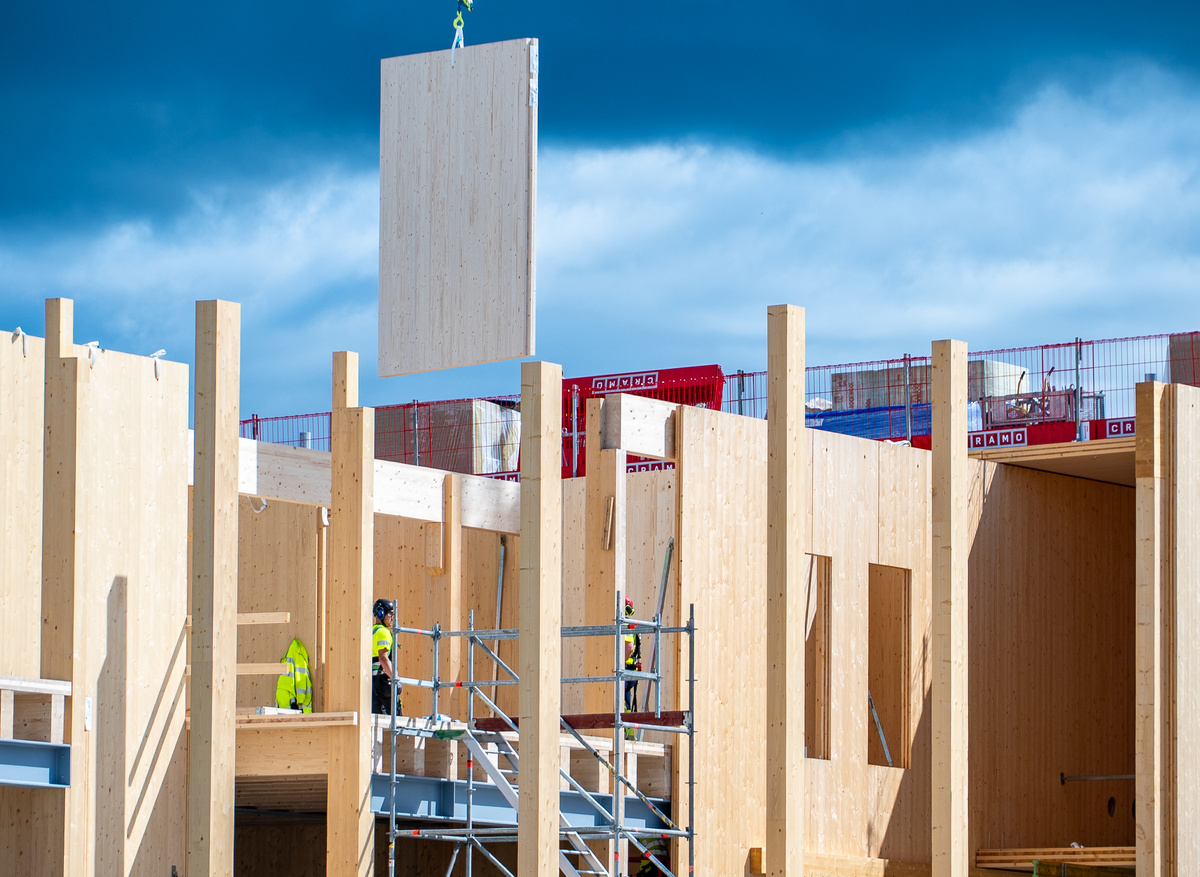
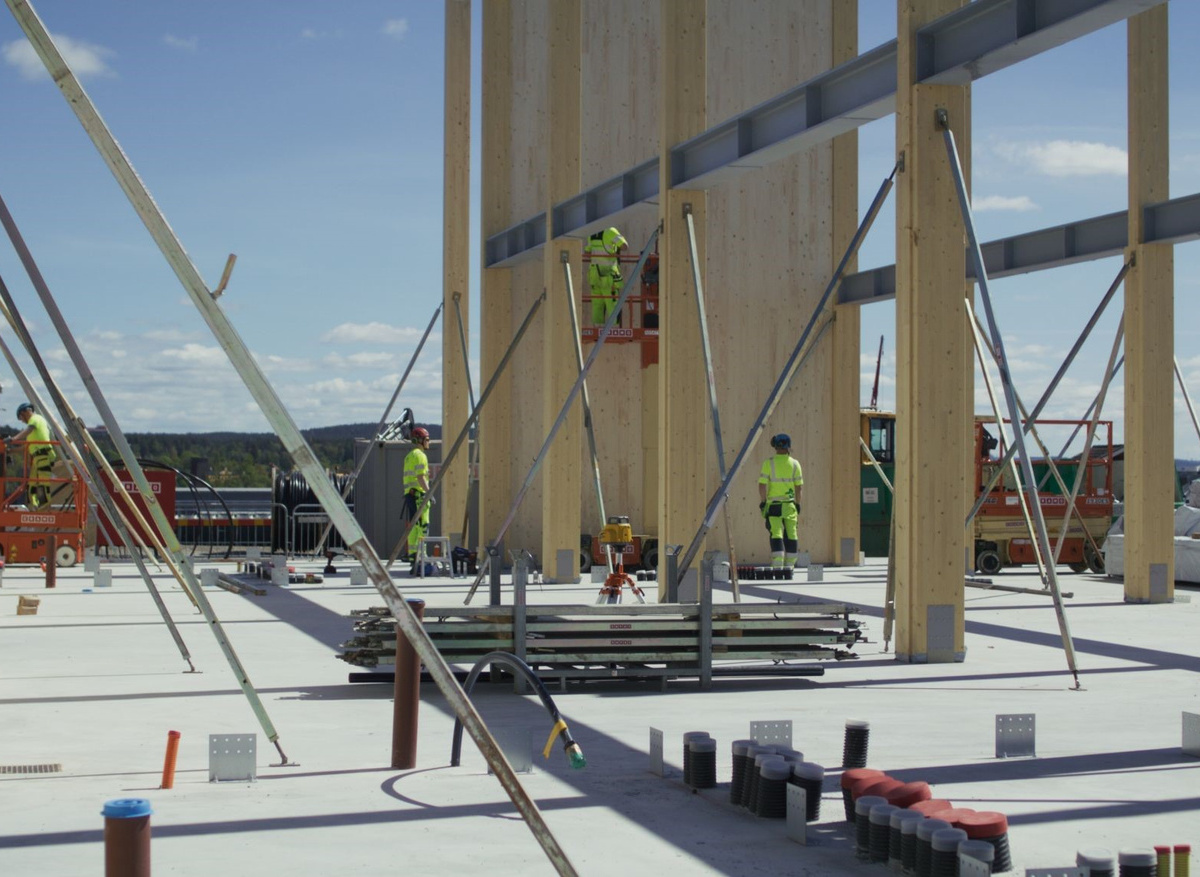
An alternative approach is emerging that improves sustainability while also supporting faster construction and greater design flexibility. EcoDataCenter has taken a leading role in this shift. At its facility in Falun, Sweden, the structural frame is largely built from cross-laminated timber (CLT). This engineered wood solution not only reduces embodied carbon, by storing carbon rather than emitting it, but also enables efficient prefabrication, lighter structures, and adaptable design solutions. These characteristics present clear advantages that desginers and developers can apply to future data centre projects.
The driving force behind EcoDataCenter is sustainability, which meant that steel and concrete created challenges. The production of cement – the key ingredient in concrete – accounts for around 8% of global CO₂ emissions, while steel production is around 7%. Therefore, replacing the conventional options with mass timber in this development drastically reduced CO₂ emissions to the tune of more than 11,000 tonnes. Wood is also unique in its ability to sequester carbon during its growth, which means EcoDataCenter is making an additional positive impact by storing over 17,000 tonnes of CO₂ for the duration of its lifecycle.
-
-
I spoke to John Wernvik, Chief External Relations & Sustainability Officer of EcoDataCenter about the project, who emphasises these sustainability advantages by saying:
We’re now beginning to see data centres being built with mass timber globally, and hyperscalers are starting to look at the material as well, although adoption is still at an early stage. EcoDataCenter shows that it’s possible to deliver this approach at a meaningful scale today, ahead of broader uptake. The shift is clearly underway, driven by the need to build data centres with far greater consideration for sustainability and long-term impact.
Once the material selection is finalised, logistics become a key consideration, both in terms of cost and environmental impact. When transporting mass timber, a single truck can typically carry around 16 elements. But in large-scale or “mega” projects, this still results in a significant number of truck movements, which can create delivery uncertainties, increase the risk of delays, and contribute to higher carbon emissions as well as local disruption.
At EcoDataCenter’s site in Falun, the transport strategy was reconfigured to be more efficient. Firstly, the delivery route was optimised not only to accelerate the installation process but also to reduce CO₂ emissions. For the mass timber elements of the project specifically, Stora Enso, utilised rail transport instead of road, which significantly lowered the project’s carbon footprint while maintaining a steady and reliable supply chain. To top it off, the mass timber elements were prefabricated, so they arrived ready for installation, further supporting a faster and more streamlined construction process.
One of the advantages of the mass timber products CLT and LVL (laminated veneer lumber) are their strength-to-weight ratio. The lightweight of the structural frame meant less concrete was needed for the foundations, making the construction process more straightforward and bringing a further reduction in carbon emissions.
That combined advantage puts developers in a favourable position if they needed to increase the square meterage without the site’s footprint, no stretch of the imagination given the anticipated growth in demand for computing power in coming years. It also opens up the possibility of a timber-based vertical extension, allowing additional floor area to be created through a lightweight structural build-up. This makes it feasible to add a second storey while still coping with the high load demands of the equipment. That is potentially a lucrative advantage when the alternative is acquiring another piece of land equivalent in size to the existing ground level of the data centre.
Once a data centre is up and running, it generates a great deal of heat. Material choice can bring about an advantage here as well because the thermal properties of wood help to regulate temperature and support cooling, thereby reducing power consumption through lower HVAC costs. Wood even reduces condensation, making it easier to protect the sensitive equipment contained in data centres.
When it comes to sensitivity, it is not just the valuable hardware that needs protection. Data centres are a depository of sensitive details, so security is paramount and it was an important consideration for the developers. As a result, the materials used had to meet strict requirements for burglary resistance, fire safety and other safety standards.
Mass timber has long been a feature of the designer's toolbox, contributing sustainability benefits to projects ranging from schools to hospitals. However, data centres bring their own set of unique material requirements, including the need for the highest levels of security, immense load-bearing strength and flexibility to support rapid scaling.
As the world’s first mass timber data centre, EcoDataCenter has demonstrated that the answer to meeting our hi-tech needs while delivering on net zero can be supported by one of our most traditional materials.
This article first appeared in AT Journal issue 158